
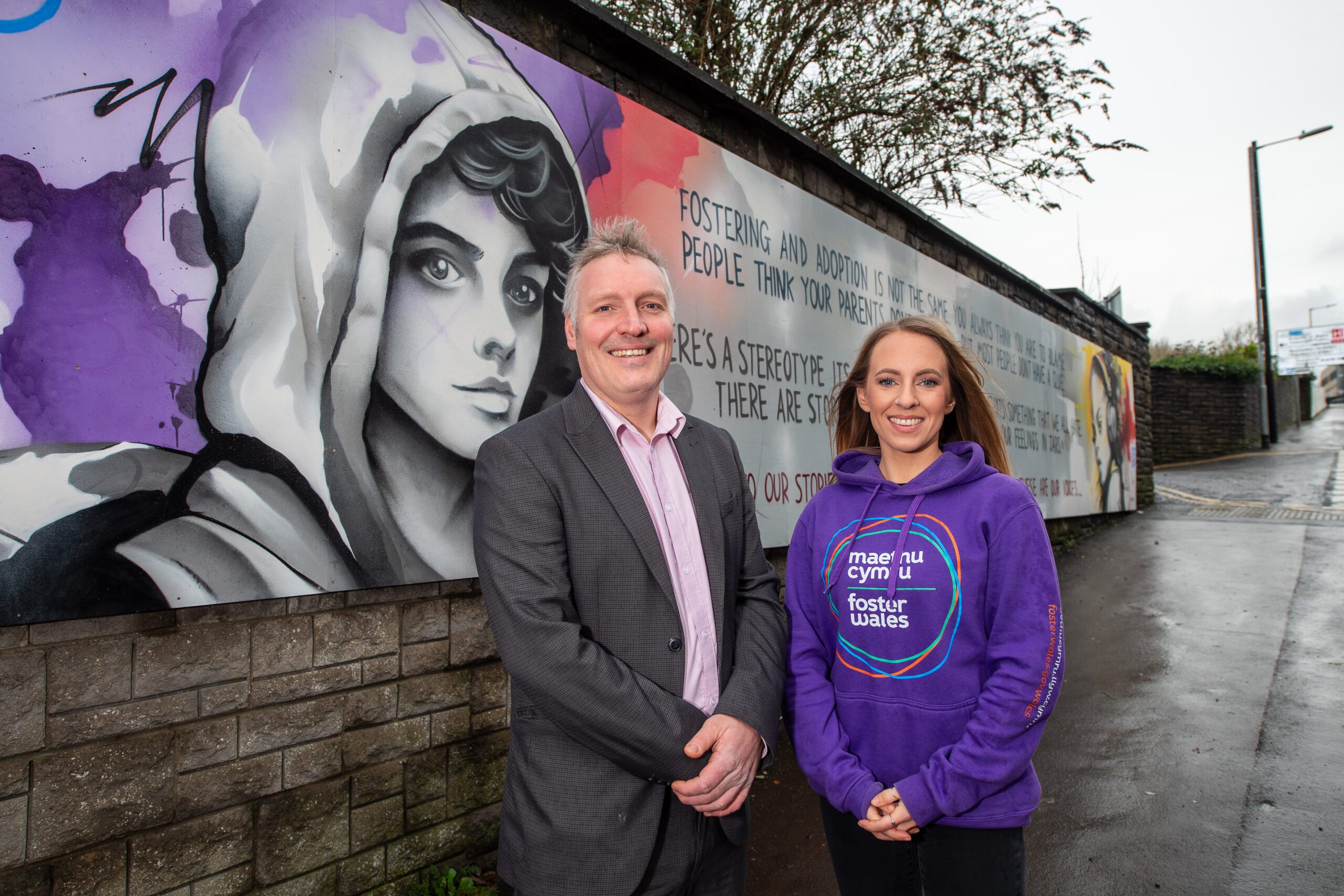
The power of one caring individual has been at the forefront of my thinking since I was very young.
Growing up, I would often visit elderly people who lived on their own with my mum, who simply took time out to visit, talk, listen and be there for people who might otherwise not have had anyone.
awareness of care
Social care, and in particular fostering, was something I was familiar with as a child. My uncle, who I was very close to, was a social worker working with looked-after young people. There was also a fostering family from church, who we spent a lot of time with, and my best friend from school (who I still go to the football with to this day) was brought up by his gran and grandad. I didn’t know it at the time, but this was my first introduction to kinship care.
Caring for others was just a normal part of life for me, so I knew I wanted to do something that would help people. I also loved sports and working with children and young people.
my journey in youth work
After finishing A levels, I took a year out doing youth work on some of the toughest estates in Manchester. I then went to university to study youth and community work. While I was there, I had some fantastic placements, including working on a council estate with a fierce reputation and spending four months working in a young offenders’ prison. I loved the experience.
Over the next few years, I took on various youth work roles, including driving an outreach bus, working as a street-based youth worker, managing a youth centre, and working one-to-one with children in the care system.
It was during this time that I first saw the gap. Young people in care were expected to leave at 18, often with little or no preparation for the outside world.
The young people I worked with couldn’t operate a washing machine, cook for themselves, or had any idea how to apply for a job.
teaching skills for independence
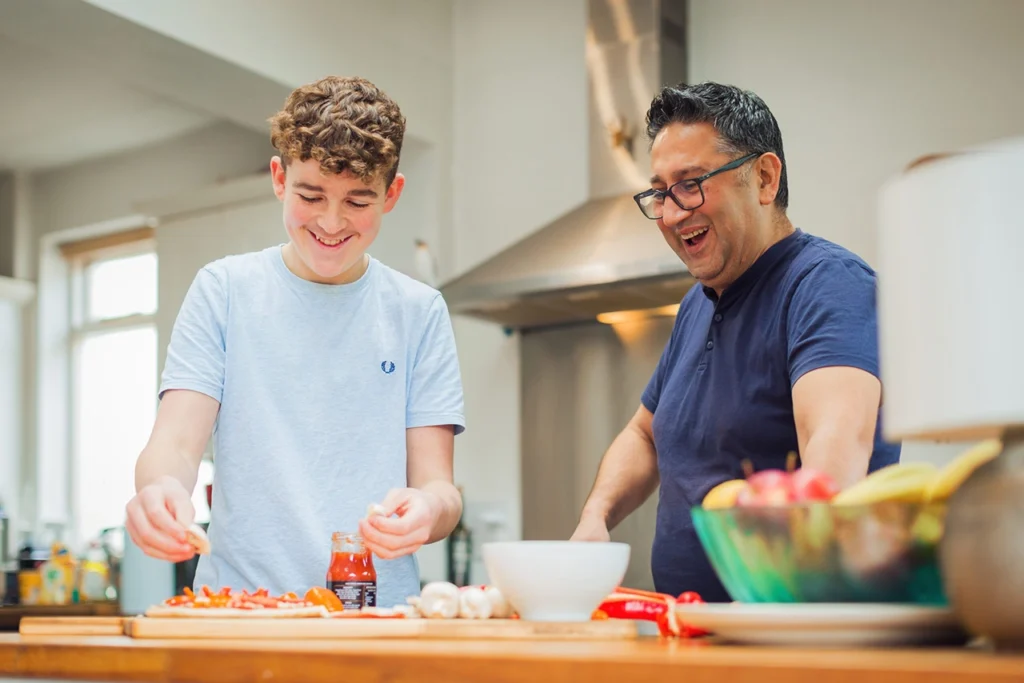
It was then that I decided to set up an independent living skills programme, offering young people the chance to learn these vital skills. I would run weekly sessions or, more often, take them away for three days and spend time teaching them how to manage their money, make a phone call, cook on a budget, and even change a light bulb or iron a shirt — the basics many of us take for granted.
Ninety per cent of the young people who attended these courses were, or had been, in care. It showed me just how much more support was needed and strengthened my passion to ensure all young people had the same opportunities in life.
employability
From there, I went on to manage employability programmes specifically for care-experienced young people. The local authority I worked for offered a fantastic, dedicated apprenticeship scheme for young people leaving care, alongside other employability programmes to support care leavers into work.
This is where I used my creativity and drive to set up new initiatives to support care leavers. From reopening a council canteen as a catering training academy, teaching knife skills, food hygiene and barista skills. I then later persuaded construction companies to donate materials and training time to redevelop a local day centre, giving care-experienced young people opportunities in construction.

young people who inspired me
The individual young people I supported and mentored changed my life.
More than ten years have passed since our first interactions, and I’m still in touch with many of them regularly – still offering advice and support, a job reference, or just a cup of tea.
Ffion
Ffion was dropped at a police station at the age of nine, wearing only a dirty dressing gown. She was taken in by the most amazing fostering family “just for the weekend”, but because they cared so deeply, she was still there eight years later.
Ffion felt stuck after leaving school and was unsure what she wanted to do with her life. She was quiet and shy and didn’t realise the potential she had. I enrolled her on the apprenticeship scheme and, alongside her foster carers, supported her for around three years, offering mentoring, advice and guidance. After in-depth interview preparation, she secured a full-time job with the council and moved into her own home.
Ffion still has a wonderful relationship with her foster carer, who is now simply “Nana” to Ffion’s son. She has recently been promoted while working for a different local authority and is doing incredibly well. She’s a world away from the young girl that I first met.
Emma
Emma was unable to live with her birth mum and entered care at the age of seven. She didn’t speak at all for the first six weeks of living with her foster carer. Thanks to their patience, love and support, she gradually became settled and very much part of the family. She had lived there for nine years by the time I met her.
Emma was hugely underconfident, painfully shy and had little self-belief, but she wanted to work with children. I worked with her to build her confidence and helped her see that her quiet nature could be a real strength when working with nursery-aged children. I supported her through the apprenticeship scheme and into full-time work.
She leaned on her foster carer during difficult days or when she needed somewhere safe to offload after work. That stability provided a vital safety net, especially when her birth mum sadly passed away.
Emma still works full-time in care and now lives with her partner. She has a little girl, and they still go on holiday with her former foster family. She contacts me regularly, usually for a job reference or advice, but she is now one of the most confident and self-assured people I know.
Seren
Then there was Seren. She was repeatedly told by her birth mum that she was never good enough. She never settled in foster care and struggled in residential settings. Seren began spending time with the wrong people and found herself in a bit of trouble before deciding to give me a chance to support her.
I worked with her through challenges at home, several house moves, supported her into employment as a residential care worker for older people, and later into studying to become a nurse. Above all, I helped her to see that she could achieve whatever she put her mind to, despite a difficult childhood, thanks to her phenomenal work ethic.
Life has taken many twists and turns for Seren, but she is a fantastic mum to two boys, has worked consistently ever since, and now owns her own successful cleaning business.
one person who cares
There is a common denominator in all these stories. One of the many reasons these young people were able to navigate leaving care and go on to live happy, independent lives.
For Emma and Ffion, that was their foster carers. For Seren, that was me. Alongside their resilience, determination and desire to build better lives for themselves, they each had one person who stood by them.
Someone to have their back, to champion them, to fight for them, to pick them up when times were tough, and to believe they could achieve whatever they set their minds to.
And that is exactly what foster carers across Wales do every single day.
one caring adult
Care-experienced motivational speaker Josh Shipp puts it best when he says that every child is just one caring adult away from being a success story.
That belief is what led me into fostering. Every young person I had seen successfully leave care had that one person – usually their foster carer – supporting them through an incredibly difficult transition.
My motivation was, and still is, to help more young people by giving them confidence, reassurance and a sense of security. To make that motivation a reality, we need more people who care. Simply put, we need more foster carers.
making things better through foster wales
After five years as a Regional Development Manager for fostering, helping to drive forward change, I took up the role of Head of Foster Wales in 2022. Since then, my sole focus has been to make things better.
Not just to recruit more foster carers, but to support them better and to give our fostering community more opportunities to develop, to lean on one another, and to share their innermost fears and hopes for the future.
To share practice so that, as local authorities, we learn from one another about what works well and what still needs to change. And, ultimately, to improve outcomes for our children, especially as they transition towards leaving care.
the next challenge
Bringing together 22 different organisations is a huge challenge, but it’s one I remain deeply committed to.
I won’t be fully satisfied until every foster carer has the best possible support when they need it, and every child has the same opportunities to thrive as their peers.
Alongside listening, learning and continuing to improve, the answer is simple: ensuring that every young person living in or leaving care in Wales has at least one person who cares.
That’s why I’m proud to lead this collaboration. I want to push for change and to work with local authorities, foster carers and young people to make things better.